
In today’s busy world, it often feels like there are too many tasks and too little time. Between work, personal goals, and urgent demands, figuring out what to focus on can be overwhelming.
The Eisenhower Matrix, also known as the Urgent-Important Matrix, is a simple yet powerful tool to help you prioritize tasks, reduce stress, and achieve more with less effort.
Whether you’re a professional, student, freelancer, or entrepreneur, mastering this matrix can revolutionize the way you work.
What Is the Eisenhower Matrix?
The Eisenhower Matrix is a time management tool attributed to Dwight D. Eisenhower, the 34th President of the United States, who was famous for his productivity and decision-making skills.
Eisenhower once said:
“What is important is seldom urgent, and what is urgent is seldom important.”
This principle lies at the heart of the matrix. It helps you categorize tasks based on two criteria:
- Urgency – Does this task need immediate attention?
- Importance – Does this task contribute to long-term goals and values?
By evaluating tasks along these dimensions, you can focus on what truly matters instead of reacting to every notification or demand.
Understanding the Four Quadrants
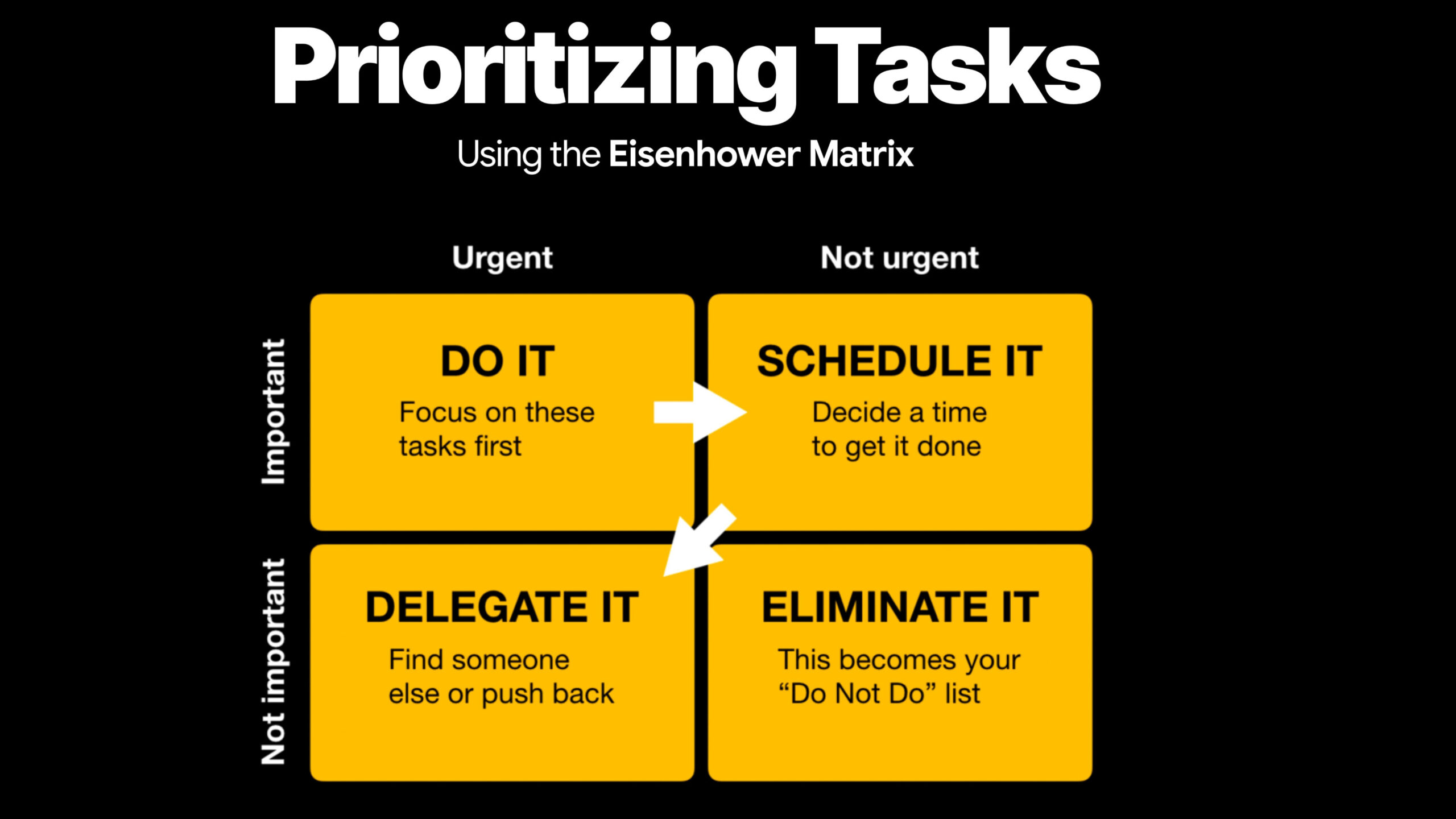
The Eisenhower Matrix divides tasks into four quadrants, each with a distinct approach:
Quadrant 1: Urgent and Important – Do It Now
These are critical tasks that must be handled immediately. Ignoring them can lead to serious consequences.
Examples:
- Meeting project deadlines
- Handling emergencies
- Responding to urgent client issues
Strategy: Focus on completing these tasks immediately to prevent crises.
Quadrant 2: Not Urgent but Important – Plan for It
These are tasks that contribute to long-term goals but don’t demand immediate attention.
Examples:
- Strategic planning
- Learning new skills
- Exercise and health routines
- Building relationships
Strategy: Schedule these tasks into your calendar. Investing time here prevents future emergencies and helps achieve meaningful goals.
Quadrant 3: Urgent but Not Important – Delegate It
Tasks in this quadrant feel urgent but don’t significantly contribute to your goals. They often come from other people’s priorities.
Examples:
- Interruptions like unnecessary meetings
- Phone calls or emails that require attention but aren’t critical
- Minor requests from colleagues
Strategy: Delegate these tasks if possible or minimize the time you spend on them.
Quadrant 4: Not Urgent and Not Important – Eliminate It
These are distractions and time-wasters that neither contribute to your goals nor demand immediate action.
Examples:
- Mindless scrolling on social media
- Watching TV excessively
- Gossip or trivial tasks
Strategy: Eliminate, postpone indefinitely, or strictly limit time spent on these activities.
How to Use it to Set Priorities
Implementing the Eisenhower Matrix is simple but requires honest evaluation of your tasks:
- List all your tasks – Write down everything you need to do, big or small.
- Evaluate each task – Ask yourself:
- Is it important for my goals?
- Is it urgent?
- Place tasks in the correct quadrant – Draw a 2×2 matrix and categorize each task.
- Take action according to the quadrant – Do, plan, delegate, or eliminate.
- Review daily or weekly – Adjust priorities as new tasks appear.
Benefits of Using this Priorities Setting
- Clarity in decision-making – Quickly see what deserves your attention.
- Focus on high-impact tasks – Spend more time on Quadrant 2, which drives long-term results.
- Reduces stress – Stop reacting to every urgent task and take control of your schedule.
- Improves productivity – Avoid wasting time on low-value activities.
- Encourages delegation – Helps identify tasks others can handle, freeing your time.
Tips for Maximizing Productivity with the Matrix
- Prioritize Quadrant 2 – Many people spend all their time on urgent tasks (Quadrants 1 & 3) but neglect important long-term work. Make planning and strategic tasks a habit.
- Use digital tools – Apps like Trello, Notion, or Todoist allow you to categorize tasks by urgency and importance.
- Set boundaries – Learn to say no to Quadrant 3 tasks that others want to push on you.
- Combine with time-blocking – Schedule blocks of time to focus exclusively on Quadrant 2 tasks.
- Review regularly – Priorities change. A weekly review keeps your matrix relevant.
Common Mistakes to Avoid
- Misclassifying tasks – Don’t confuse urgency with importance. Just because something is pressing doesn’t mean it’s valuable.
- Overloading Quadrant 1 – Avoid letting urgent tasks dominate your day; it can lead to burnout.
- Neglecting Quadrant 2 – This quadrant is where growth happens; skipping it stalls progress.
- Failing to delegate – Handling every urgent but unimportant task yourself wastes energy.
Who Can Benefit from the Eisenhower Matrix?
- Professionals and Managers – Organize work, delegate tasks, and prioritize strategic projects.
- Students – Focus on assignments and exam preparation rather than distractions.
- Entrepreneurs – Separate high-impact activities from busywork.
- Remote Workers – Avoid reacting to every notification and control their schedule.
Even creative professionals, like writers and designers, can use the matrix to focus on meaningful projects rather than low-priority tasks.
Real-Life Example
Imagine a freelance writer managing multiple clients:
| Task | Quadrant | Action |
|---|---|---|
| Draft article due tomorrow | 1 | Do now |
| Plan blog topics for next month | 2 | Schedule |
| Reply to non-urgent emails | 3 | Delegate or batch later |
| Scroll social media | 4 | Eliminate |
By following this structure, the writer avoids last-minute panic, focuses on growth, and reduces distractions.
Combining the Eisenhower Matrix with Other Productivity Tools
The matrix works even better when paired with other techniques:
- Pomodoro Technique – Focus on high-priority tasks in short, timed intervals.
- Time-blocking – Reserve specific hours for Quadrant 2 tasks.
- Task management apps – Tag tasks according to quadrants to track and act efficiently.
Conclusion
The Eisenhower Matrix is a simple yet transformative tool for anyone who wants to reclaim control over their time. By categorizing tasks based on urgency and importance, you can focus on what truly matters, reduce stress, and increase productivity.
Remember: productivity is not about doing more, but about doing the right things.
Focus on Quadrant 2, delegate Quadrant 3, eliminate Quadrant 4, and handle Quadrant 1 with care. Over time, this approach leads to better decision-making, less stress, and more meaningful accomplishments.
Start today: draw your matrix, list your tasks, and see the difference it makes in your life.
Leave a Reply